
16 ThamesMOG Morgans (plus one interloper from CranMOG, and David’s Caterham) and 31 Morganeers enjoyed sunny weather and gentle breezes during their visit to the Shuttleworth Collection. As we arrived, we were greeted by a flying display from the Collection’s Spitfire — a fantastic way to start! It is called a Collection, not a museum, because all the exhibits—whether aircraft, cars, commercial vehicles, or motorbikes—are operational.
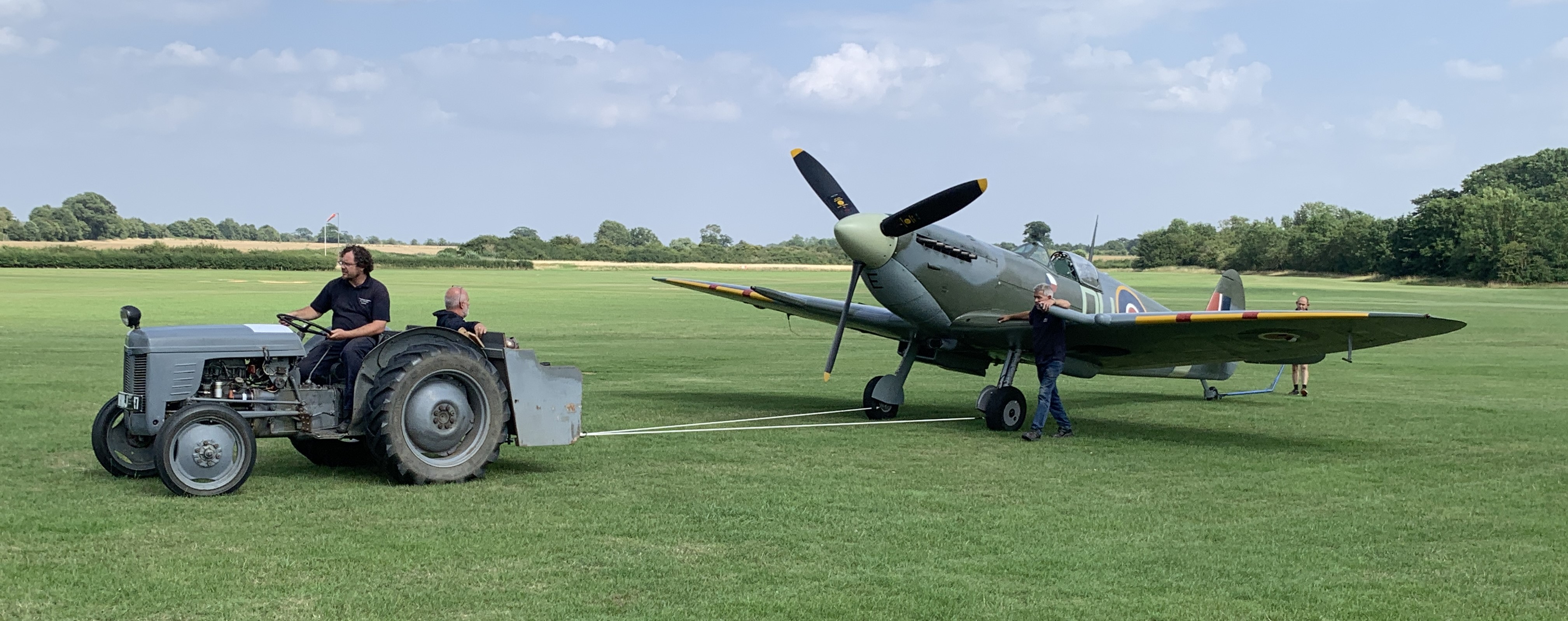
We divided into two groups and took a detailed two-hour guided tour of the four aircraft hangars, during which we learned about the aircrafts' history and the backgrounds of early designers and pilots. Among the many things we were told, we learned how parachutes were first developed, plus the difference between radial and rotary engines, and how these differences affected an aircraft’s performance. I only wish I could recall 90% of what our tour guide, Ernie, told us.
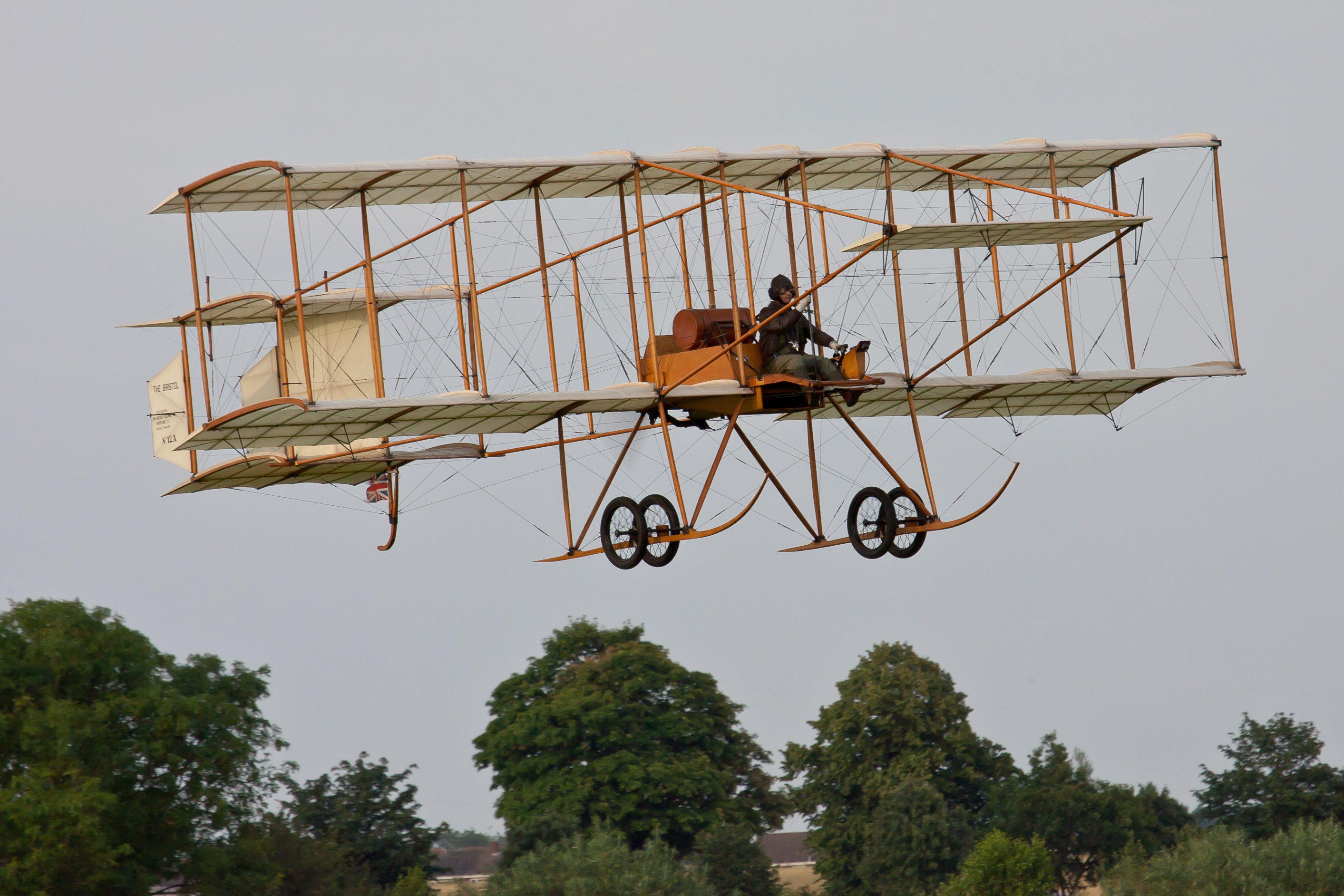
The Collection features aircraft ranging from human-powered kites pre-dating 1903 and the Wright brothers' first flight, to a 1955 Provost T.1. Among these was a replica of a 1910 Bristol Boxkite, built in the 1960s for the film ‘Those Magnificent Men in Their Flying Machines’.
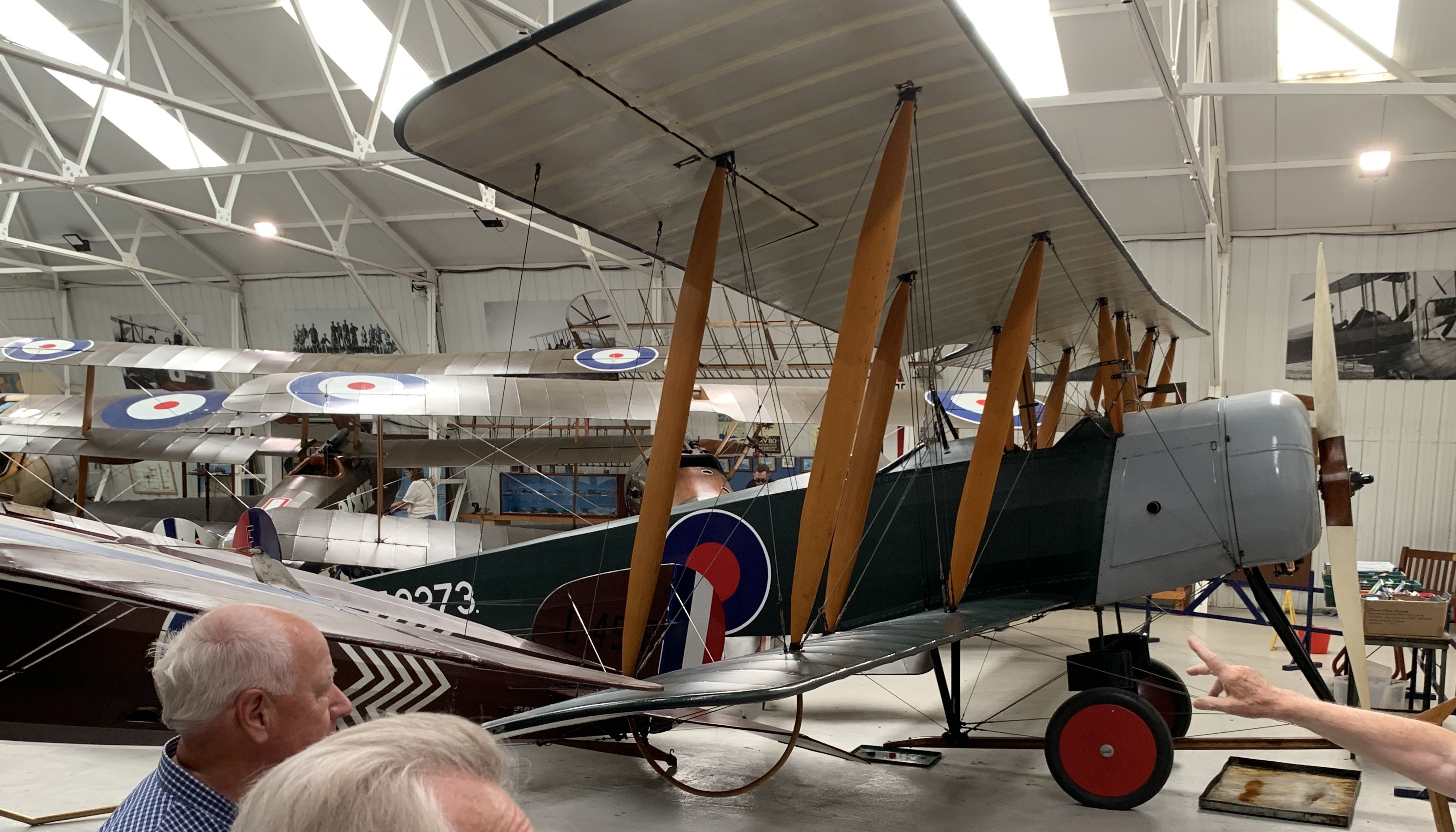
To illustrate the rapid progress in aircraft design over a short period, there was an Avro 504, which first flew in 1913. By the end of WWI, over 8,000 504s had been produced for use by the Royal Flying Corps, RAF, Admiralty, and the Royal Aircraft Establishment at Farnborough. This particular aircraft appeared in the film “Reach for the Sky” before being donated to the Collection.
The aircraft that most of the volunteers at the Collection would save in the event of a fire is the de Havilland DH 88 Comet. The DH.88 Comet was designed specifically to take part in a race from Mildenhall in England to Melbourne in Australia, to mark the centenary of the foundation of the State of Victoria in 1934. The race contestants - including the three Comets - set off at dawn on 20 October. 'Grosvenor House’ was the winner of the speed prize, covering the course in 70 hours and 54 minutes. It is regarded as one of the most significant British aircraft still flying.
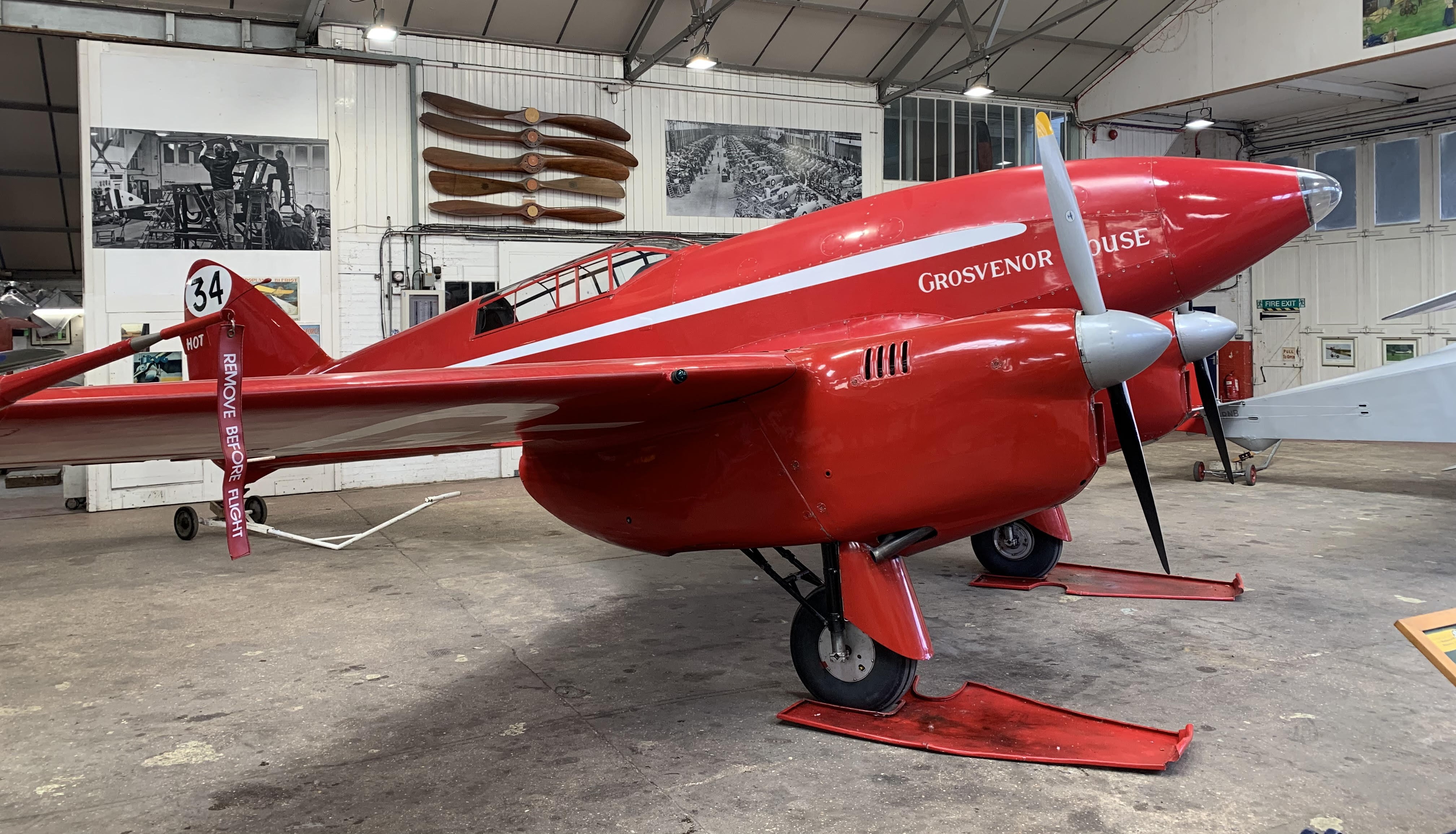
At the end of our tour, we were joined by a man from The Amy Johnson Comet Restoration Centre, based at Derby Airfield, who are restoring the only other remaining Comet, ‘Black Magic’.
This trip was well worth the drive around the M25 and along the A1(M). We would like to thank Chris Beck for organising this splendid visit. Planning it for the day prior to the summer air display was brilliant, as we watched ten Tiger Moths in formation, and other aircraft, rehearsing.
I would like to thank, Chris Beck, and The Shuttleworth Collection, for some of these photos.