
On Sunday 23rd. April, The Thames Valley Centre visited The Steam Museum at Kempton on a Steaming Weekend. One weekend a month from March to November the museum runs one of their enormous reciprocating steam engines in steam.
Because we were a large party, the museum asked us to arrive at 9am before the doors opened to the public at 10:30. Some five Morgans gathered in the car park of The Harte & Magpies at 8 to convoy, the others joining us there.
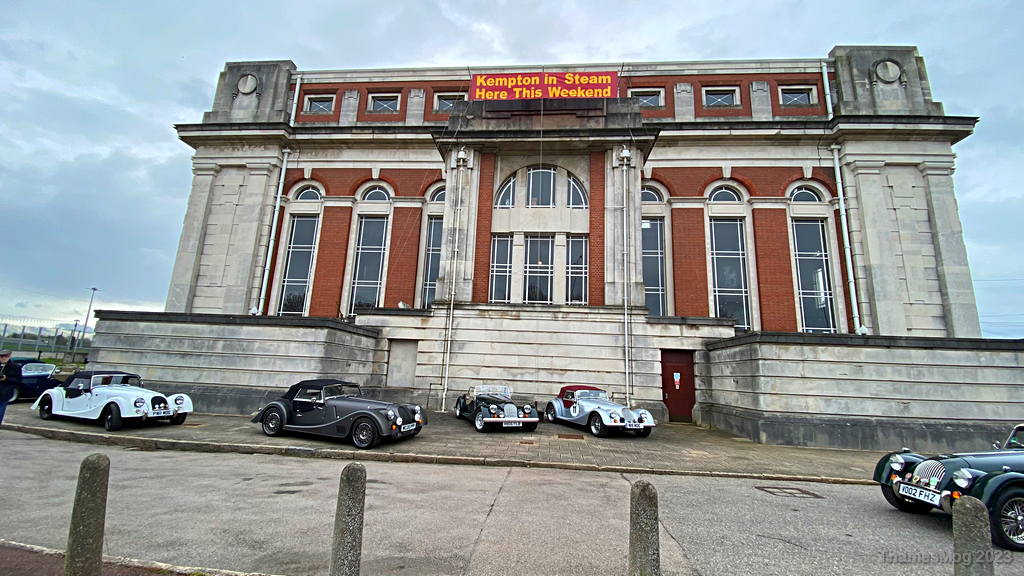
I counted 15 Morgans parked up in front of the Museum, unfortunately there were some last-minute dropouts due to Covid and water pump failure (very appropriate). We were expecting to see some members of the 3-Wheeler Touring Group arriving later but only one was spotted.
There are two of the massive steam engines in their original hall, they are named ‘Sir William Prescott’ and ‘Lady Bessie Prescott’ and are mirror images of each other. One is run several times during the day and the other is not operational and can be accessed by the visitors via the stairways and gantries. The building itself is impressive with a beautifully restored wooden roof and black and white glazed brick walls and columns.
The engines are inverted marine-type triple-expansion engines. They were built by Worthington Simpson in Newark-on-Trent, fully assembled, stripped and then shipped to Kempton by rail with a weight limit of 18 tons per component. They are named after the Chairman of the Metropolitan Water Board and his wife. It occurred to me that we probably could not manufacture such large components in the UK now.
The engines were installed to each pump 12 to 19 million gallons of drinking water per day to reservoirs in North London for the supply of fresh water to The City, Central, East and West London.
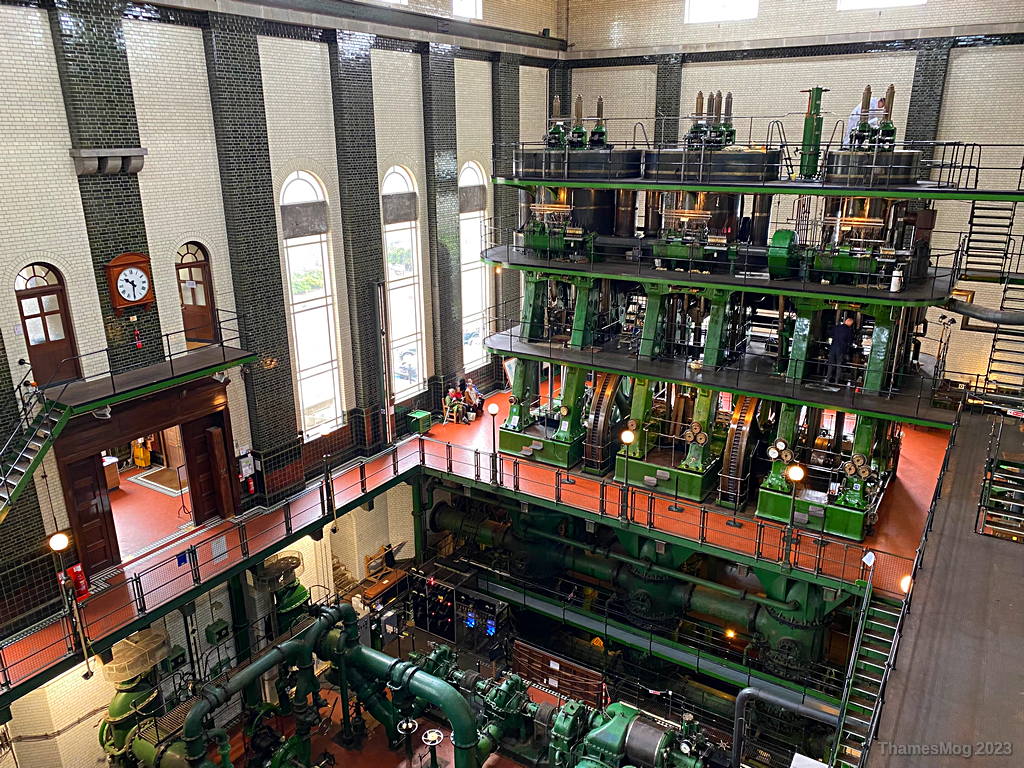
The triple-expansion engines stand 62 feet tall and weigh 800 tons. They have a top speed of 25.4 revolutions per minute and generate 1008 water horsepower. Each engine has three double-acting cylinders known as the high, intermediate and low-pressure cylinders. Each measure 29, 54 and 86 inches, respectively. In service days, superheated steam entered the high-pressure cylinder at 200 pounds per square inch. The pressure has been reduced to 60 psi for operation in preservation. The remaining two cylinders reuse the steam before being exhausted into a separate condenser which produces a vacuum. A bank of 6 coal fired boilers in an adjacent boiler house originally produced the steam, this is now generated by a small gas-fired boiler. In period the coal consumption rivalled a small power station.
The crank webs are set 120 degrees apart, providing smooth, balanced operation to the engine motion and a steady discharge from the pumps into the water mains. There is no point during the engines’ rotation where no pump delivers water.
The triple-expansion engines were commissioned in 1929 by the Minister of Health, Arthur Greenwood and ceased operating in 1980 when Kempton Park became an electric pumping station.
The central area of the hall was designated for a third reciprocating engine but technology advanced and two steam turbines driving centrifugal pumps were installed instead. Their relative size to the reciprocating engines was striking given they generated similar power and pumped up to 24 million gallons a day.
Also on display were two Mercury Vacuum Rectifiers, these were installed to convert the 415v AC to 200v DC to run the original DC motors and equipment in the station when AC power from the grid became available. The two units on display were actually rescued from The Royal Opera House in Covent Garden and restored to running condition.
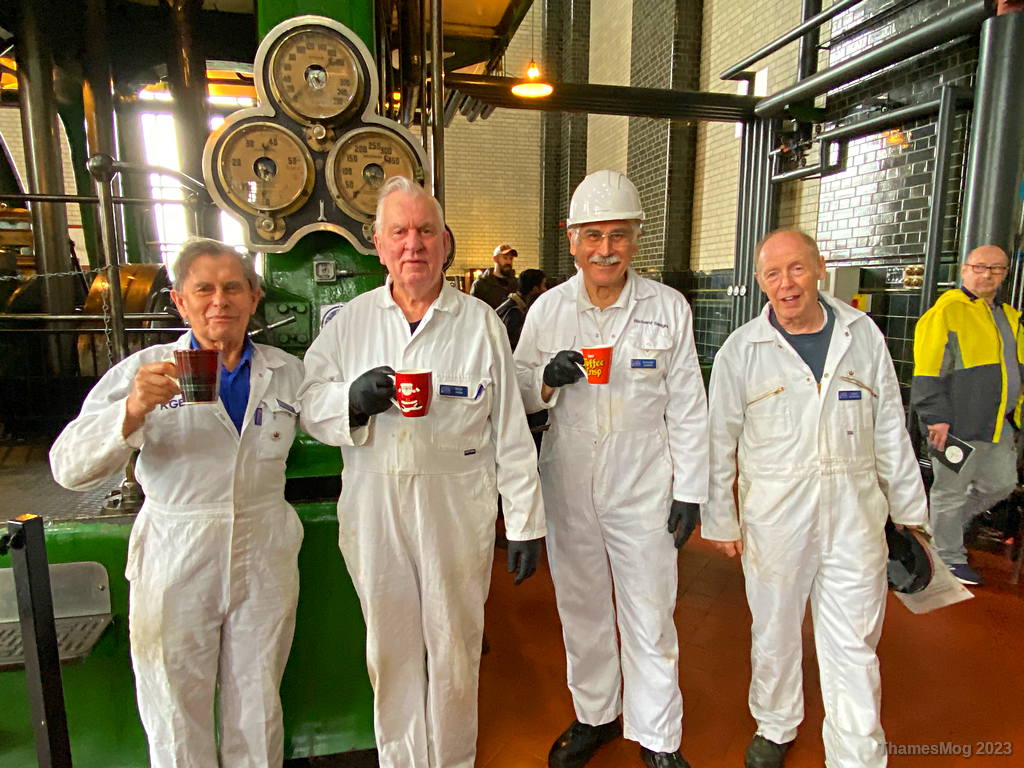
We had an introduction from Richard Abbott, one of the volunteers who had helped to organise our visit, we then split into two groups to climb up onto The Lady Bessie and see the engine up close. I was very impressed with how much access we were given. The low hand rails and lack of kick flats on the walkways added to the vertigo, it certainly wouldn’t meet modern HS&E standards. We were then given freedom to roam the rest of the museum and exhibits.
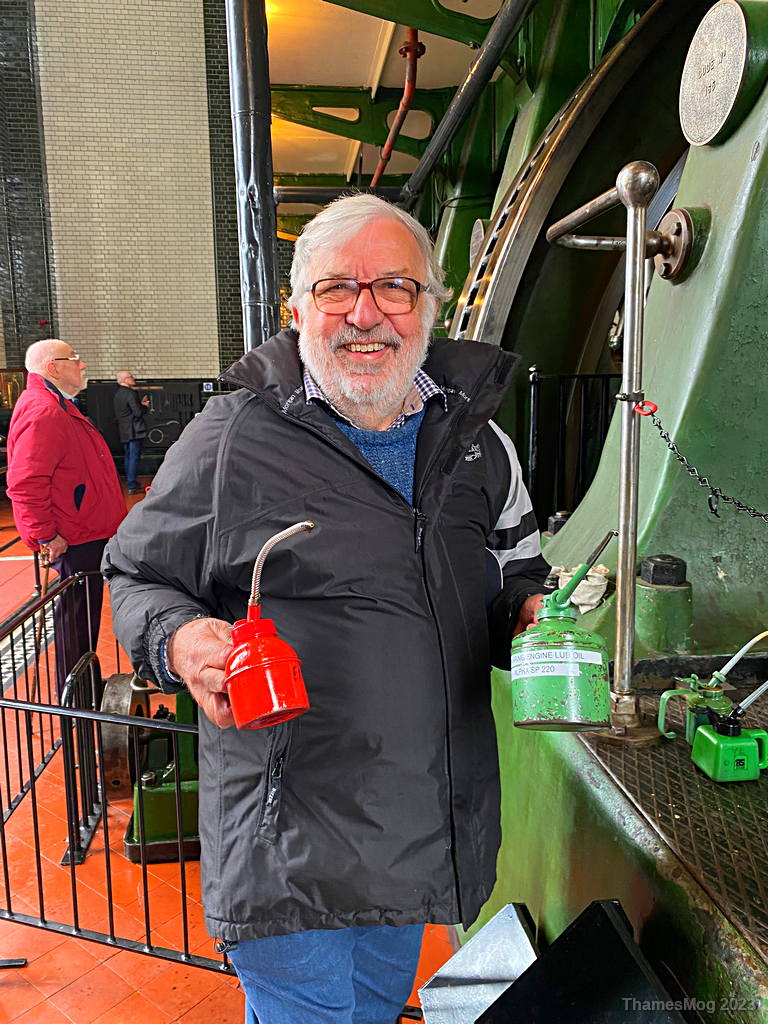
At 11:30 the Sir William Prescott was readied for starting, this involved engaging a small steam driven barring machine and exhausting the 1st. stage cylinder. After about three attempts the engine successfully ran. In service, the engines would run continuously 24/7 for about 8 months of the year. The smoothness of the machine was noticeable, there were several drip-fed tun dishes feeding the bearings. Oil from the plain bearings fall to a sump for cleansing and return to the top of the engine.
Unfortunately, the weather had deteriorated whilst we were in the museum and we had a rather damp drive home on the M25, which was its usual crawl past Heathrow.
Overall, I think everyone enjoyed the morning. When we left, the public were pouring in and I understood why we’d been asked to arrive early. I have written to thank the volunteers for their hospitality and congratulate them on the work they do keeping these magnificent machines preserved as living history.
Chris Beck
Images courtesy of Guy Nickless


